
Why Roofing Companies Fail at CRM Implementation (And How to Actually Make Your CRM Work for Your Business)
May 10, 2026
Most roofing companies don’t fail because they picked the “wrong” CRM.
They fail because they never fully implement the system in a way their team will actually use.
Whether it’s JobNimbus, AccuLynx, Roofr, or another platform, the reality is the same:
A CRM only works if your processes, team, and leadership are aligned around it.
And unfortunately, most roofing companies treat CRM implementation like installing an app instead of restructuring the way the business operates.
That’s why so many contractors end up saying:
- “Our team doesn’t use it.”
- “It’s too complicated.”
- “We spent thousands and still use spreadsheets.”
- “Nothing is automated.”
- “Our sales reps still forget follow-up.”
- “Production is still chaotic.”
If that sounds familiar, you’re not alone.

The Real Reason Roofing Companies Fail at CRM Implementation
1. They Implement Software Before Building Processes
This is the biggest mistake roofing companies make.
A CRM does not create organization.
It exposes the lack of organization already happening inside the business.
If your company doesn’t already have:
- a defined sales process,
- production workflow,
- communication structure,
- lead follow-up system,
- or accountability standards,
then your CRM becomes digital chaos.
Most roofing companies skip process mapping entirely and jump straight into:
- pipeline setup,
- automations,
- integrations,
- and training.
But without operational clarity, the CRM becomes overwhelming almost immediately.
What should happen first:
Before implementing any CRM, roofing companies should map:
- Lead flow
- Sales stages
- Inspection process
- Insurance workflow
- Supplements
- Production milestones
- Collections
- Communication touchpoints
- Follow-up timelines
The CRM should support the business process — not create it.
2. Leadership Doesn’t Fully Commit
Most CRM failures are leadership failures.
If ownership:
- still uses text messages instead of the CRM,
- allows sales reps to bypass the process,
- doesn’t enforce updates,
- or refuses to learn the system themselves,
the team will never take implementation seriously.
CRM adoption starts from the top.
Your team watches what leadership tolerates.
If the owner says:
“Just make sure it gets done somehow…”
then the CRM immediately becomes optional.
And optional systems always fail.
3. Sales Reps Resist Accountability
This is a huge issue in roofing.
Many roofing sales reps are used to:
- keeping leads in their phones,
- managing deals privately,
- avoiding follow-up tracking,
- and operating independently.
A properly implemented CRM creates visibility.
That means:
- managers can track follow-up,
- see conversion rates,
- monitor inspections,
- review communication,
- and identify where deals are falling apart.
Some reps resist CRM implementation because it removes ambiguity and exposes inconsistency.
This is why training alone is never enough.
Implementation requires accountability.
4. Roofing Companies Overcomplicate the CRM
Another common mistake:
Trying to automate everything immediately.
Too many contractors build:
- dozens of pipeline stages,
- unnecessary automations,
- overly complex workflows,
- duplicate tasks,
- and confusing dashboards.
The result?
Nobody uses it correctly.
The best roofing CRM setups are usually the simplest.
A good CRM should create:
- clarity,
- consistency,
- visibility,
- and communication.
Not confusion.
5. There’s No Dedicated CRM Ownership
Most roofing companies assign CRM setup “on the side” to:
- office admins,
- operations managers,
- or sales managers already overwhelmed with work.
Then implementation stalls.
Successful CRM implementation requires ownership.
Someone needs to be responsible for:
- setup,
- optimization,
- training,
- troubleshooting,
- process enforcement,
- and ongoing improvements.
Without ownership, the CRM slowly dies after the initial excitement wears off.
6. Training Stops After Setup
This is another major failure point.
Most roofing companies:
- onboard the CRM,
- do one training session,
- then assume the team will figure it out.
But CRM implementation is not a one-time event.
It’s an operational transition.
Teams need:
- recurring training,
- workflow reviews,
- SOPs,
- onboarding processes,
- accountability meetings,
- and optimization adjustments.
Especially in roofing where turnover can be high.
7. They Never Use the Data
One of the biggest missed opportunities in roofing CRMs is reporting.
Most contractors never actually use the data their CRM collects.
A CRM should help answer:
- Where are leads coming from?
- Which sales reps convert best?
- Where are deals stalling?
- What’s our close rate?
- What’s our supplement rate?
- How long are jobs sitting in production?
- What’s our average turnaround time?
- Which marketing channels are profitable?
Without reviewing the data regularly, the CRM becomes an expensive filing cabinet.

What Successful Roofing CRM Implementation Looks Like
Successful roofing companies use their CRM as the operational center of the business.
Their CRM manages:
- lead intake,
- appointment scheduling,
- sales tracking,
- insurance claims,
- production management,
- customer communication,
- invoicing,
- collections,
- and reporting.
Everyone follows the same process.
Everyone updates the system.
Everyone operates from one source of truth.
That’s when a roofing CRM actually creates scalability.

Signs Your Roofing CRM Is Failing
If you notice these issues, your implementation likely needs attention:
- Leads falling through the cracks
- Sales reps not updating jobs
- Multiple communication channels causing confusion
- Production delays
- Missed follow-up
- No visibility into KPIs
- Inconsistent customer experience
- Team members avoiding the CRM
- Reporting inaccuracies
- Duplicate data
These are not software problems.
They are implementation problems.
Final Thoughts
The roofing companies winning right now are not necessarily the ones with the fanciest CRM.
They’re the companies with:
- clear processes,
- operational discipline,
- accountability,
- leadership buy-in,
- and consistent implementation.
A CRM will not fix a broken business.
But a properly implemented CRM can absolutely help scale a healthy one.
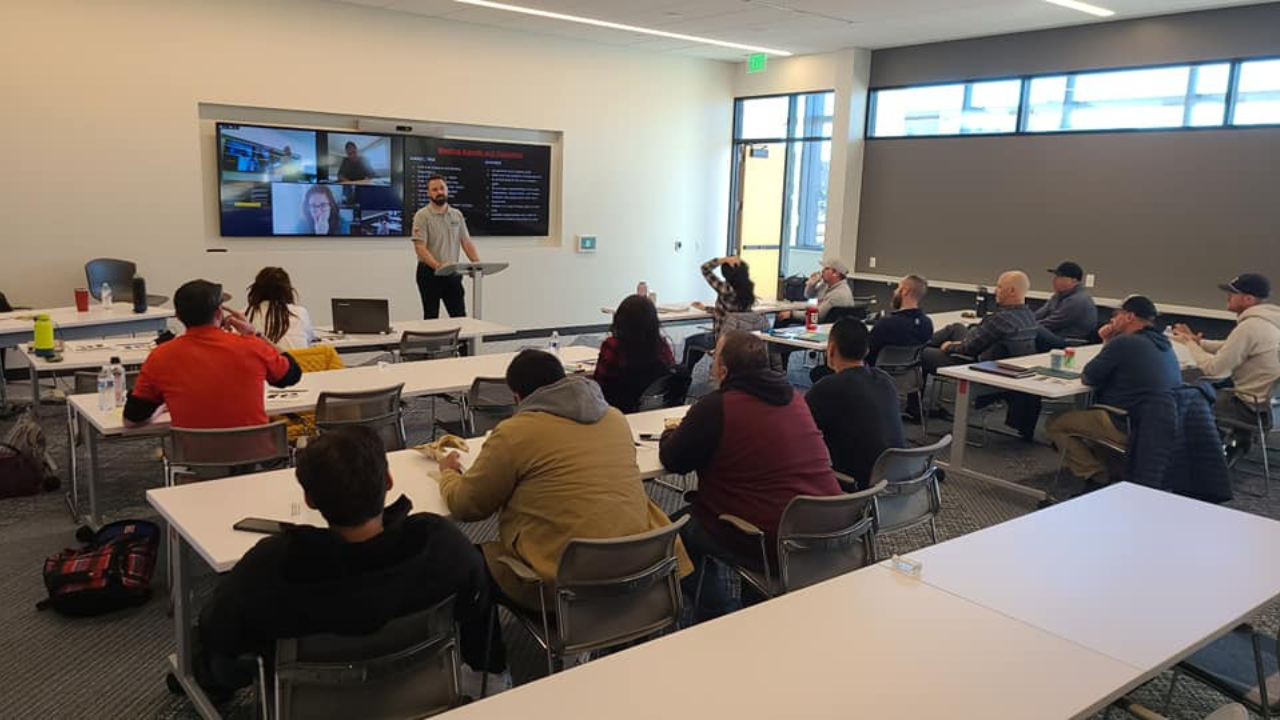
Ready to Fix Your Roofing CRM?
At The Roofing Academy, we help roofing companies:
- implement CRM systems,
- streamline operations,
- improve accountability,
- automate follow-up,
- build scalable workflows,
- and create operational clarity.
If your CRM feels more frustrating than helpful, it’s probably not the software.
It’s the implementation strategy.
Book a free strategy call and let’s identify where the breakdown is happening in your roofing business.
Learn How You Can Build Your Own Multi-Million Dollar Roofing Business
Whether you are just getting started, have an established company that needs help turning things around, or anything in between, we want to help transform your way of thinking and your business. By joining The Roofing Academy, you will also be able to meet and network with like-minded individuals with the same goals: success, freedom, and happiness.
